
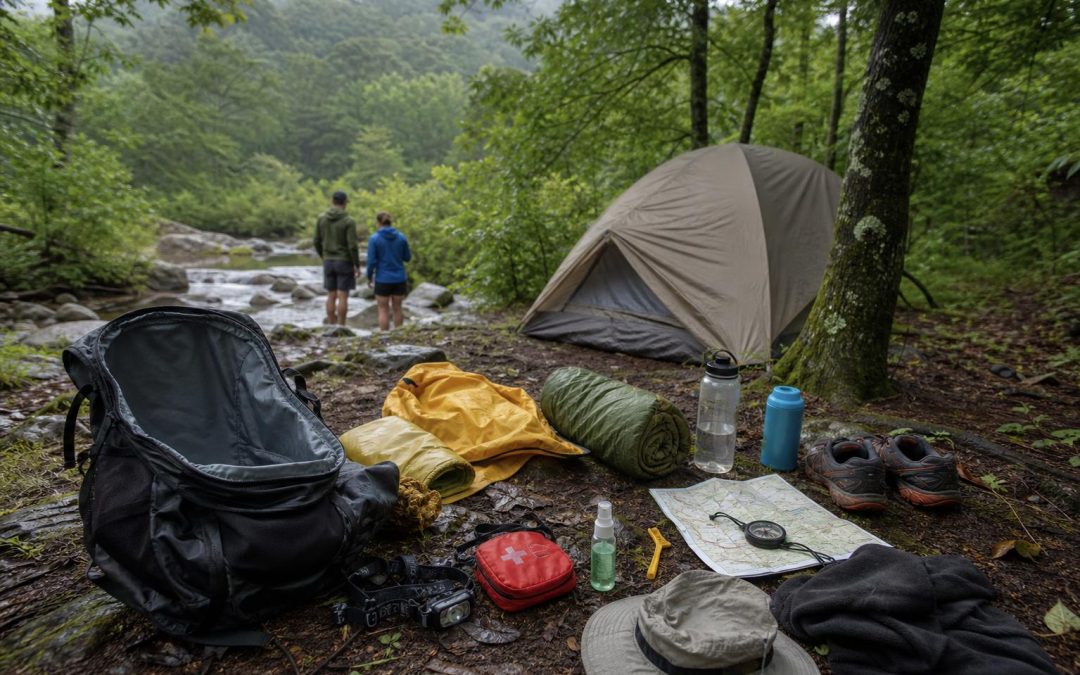
You can leave an Arkansas trailhead under a blue sky, climb across sun warmed rock, walk through a cool hollow, and reach camp just as rain starts tapping on the leaves.
That is not bad luck. That is Arkansas.
The trick to packing for a weekend here is not bringing everything you own. It is understanding that Arkansas landscapes can change the rules within a few miles. A rocky Ozark trail asks something different of your feet than a Delta boardwalk. A gravel bar on the Buffalo feels hot at noon and surprisingly chilly after sunset.
Pack for those changes, and you can stop worrying about your gear long enough to notice why you came: bluff lines glowing in the evening, quartz underfoot in the Ouachitas, barred owls calling across a campground, and mist lifting off a creek before breakfast.
Arkansas Can Change the Rules Before You Reach Camp
Arkansas does not have enormous western mountains, but do not mistake that for easy terrain. Ozark trails are often steep, rocky, root covered, and rougher than their mileage suggests. Fallen leaves can hide loose stones, while spring rain can turn a small crossing into a serious obstacle.
The Ouachitas feel different. Their long ridges run east and west, which is unusual enough to notice on a map. Up on those ridges, you may get more sun and wind than expected. Drop into a valley and the air can become still, damp, and several degrees cooler.
Then there are the lowlands. In the Delta and southern Arkansas, flat ground may look gentle, but humidity, direct sun, mosquitoes, and long distances between shade can wear you down quietly. Arkansas has several kinds of outdoors, and each one deserves a little respect.
Good to Know: Check the forecast for the actual park, river, or forest you plan to visit. Weather in Little Rock may tell you very little about conditions near Ponca, Mount Magazine, Lake Ouachita, or the lower White River.
The Gear I Would Pack for Almost Any Arkansas Weekend
Start with a small, dependable core. These are the things I would want whether I was heading into the Ozarks, camping beside a lake, or walking through a cypress swamp.
- A downloaded map and a paper backup. Cell service disappears quickly in hollows, forests, and along many scenic roads. Download your route before leaving town.
- More water than the mileage seems to require. Humidity can drain you before you feel thirsty. If you plan to use creek water, carry a proper filter or treatment method.
- A light rain shell. Summer rain can arrive fast, and spring weather changes its mind constantly.
- Quick drying clothes and an extra layer. Even warm days can end with a cool evening beside water or down in a valley.
- Trail shoes or boots with real grip. Arkansas sandstone, limestone, roots, and wet leaves can all be slick. Comfortable street shoes are rarely my pick for a rocky trail.
- Extra socks. This is a small luxury until you step into a creek. Then it becomes the best thing in your pack.
- A headlamp. Sunset comes quickly under a forest canopy, and phone lights make poor camp tools.
- Sun protection and insect repellent. Use a repellent labeled for ticks, and check yourself carefully at the end of the day.
- A compact first aid kit. Add blister care, any needed medicine, and tweezers for ticks or splinters.
- Food, a trash bag, and a secure way to store meals. Raccoons are clever, and Arkansas has black bears in several regions. Keep food and scented items away from your sleeping area and follow local rules.
For camping, add a dependable tent with a rain fly, stakes suited to the campsite, a sleeping pad, and a sleeping bag rated cooler than the forecast low. Arkansas humidity can make a mild night feel colder than the number suggests.
One overlooked item is a dry shirt reserved for camp. Changing out of a damp hiking shirt before the temperature drops can transform the whole evening.
What to Add for Mountains, Lakes, Creeks, and Lowlands
For Ozark and Ouachita Trails
Add trekking poles if the route includes a long descent, loose rock, or several creek crossings. They are especially useful in places such as the Buffalo River country, where a trail may climb from a shaded drainage onto a rocky bench faster than the map makes obvious.
I also recommend a little more food than you think you need. A six mile Arkansas hike can feel much bigger when every mile includes ledges, roots, and elevation change.
Worth Noticing: In the Ouachitas, look down occasionally. Milky quartz is common, and pale pieces often shine along the trail. Leave them where they are in protected areas, but take a moment to appreciate why these mountains have such a different look from the Ozarks.
For Lakes and River Camps
Bring a dry bag for your phone, keys, warm layer, and anything that must remain dry. If you are paddling, wear a properly fitted life jacket. Calm water near shore can make a lake feel harmless, but wind can build waves surprisingly fast on open stretches of Beaver Lake, Greers Ferry, Bull Shoals, and Lake Ouachita.
Pack secure camp shoes, not loose flip flops, if you expect gravel bars or rocky shorelines. Arkansas river rock shifts underfoot, and submerged stones can be slick.
For Creeks and Waterfalls
This is where people are most tempted to trust the morning weather. Do not. Rain miles upstream can raise a creek even when the sky above you looks fine.
Bring water shoes with traction, a dry change of clothes, and a map showing alternate routes. Never enter fast or muddy water just because the trail continues on the other side. Turning around is not missing the adventure. Sometimes it is the smartest Arkansas outdoor skill you can learn.
For the Delta and Southern Lowlands
Choose light, breathable long sleeves and pants. They help with sun, ticks, mosquitoes, briars, and poison ivy. Carry extra water, especially on open levees, wildlife areas, and trails where shade is limited.
A small pair of binoculars is worth the space here. Flat country opens the sky, and wetlands bring in herons, egrets, wood ducks, and seasonal migrants. What first looks like an empty field or quiet patch of water often becomes the busiest landscape of the weekend once you slow down and watch.
A Few Local Habits That Make the Whole Trip Better
- Tell someone your route and return time. This matters more than posting where you went after you return.
- Check river levels, burn bans, trail notices, and park alerts. A forecast alone will not tell you whether a crossing is safe or a road is open.
- Wear blaze orange during hunting seasons. Many Arkansas trails cross or border public lands where hunting is allowed.
- Inspect for ticks every evening. Check waistbands, sock lines, behind knees, and around the scalp.
- Do not count on gathering firewood. Rules vary, wet wood burns poorly, and moving firewood can spread pests. Check campsite regulations before arriving.
- Leave rocks, plants, feathers, and old objects where you find them. The small things help tell the story of the place.
My final recommendation is simple: leave a little room in your schedule. Arkansas rewards people who are not rushing. You may find a side trail to an overlook, hear elk near the Buffalo, notice bald cypress knees rising from dark water, or decide that a quiet gravel bar deserves another hour.
The best packed visitor is not the one carrying the most gear. It is the one ready to slow down when Arkansas gives them a reason.