
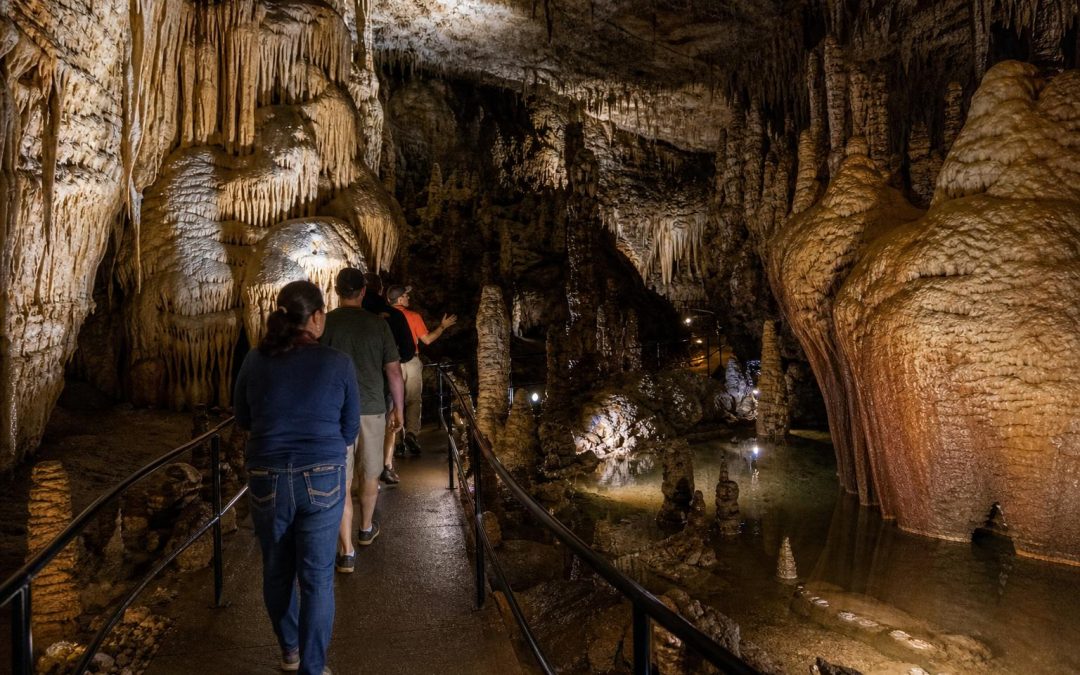
You do not have to crawl through a muddy crack, squeeze between rocks, or own a helmet with a headlamp to enjoy an Arkansas cave.
For most of us, the better introduction is a guided walking tour. You follow a prepared path, listen to someone who knows what you are looking at, and discover that the Ozarks continue beneath your feet in rooms, passages, pools, and formations you would never suspect from the road above.
That is the idea I want you to carry underground: an Arkansas cave is not separate from the landscape outside. It is the hidden half of it.
Once you understand that, springs make more sense. Sinkholes become more interesting. Even a dry creek bed can start telling you something about where the water went.
You Don’t Have to Be a Spelunker to Discover Arkansas Underground
Arkansas has several developed caves where ordinary visitors can walk in with a guide. These are not extreme adventures. They are more like guided introductions to what water has been quietly doing inside Ozark limestone for a very long time.
Blanchard Springs Caverns, north of Mountain View, is the place I recommend when someone wants the grand Arkansas cave experience. The rooms are huge, the formations are beautiful, and the surrounding national forest lets you connect the underground story to a spring, creek, bluffs, and wooded hills above.
Blanchard can feel almost too big to be real. That is part of the fun. Give your eyes time to adjust, then look beyond the largest formations. Tiny soda straws, rippled flowstone, and clear water along the path can be just as interesting as the room filling columns.
Cosmic Cavern near Berryville feels different. It is known for its underground lakes and has a more intimate, old fashioned cave tour atmosphere. Expect stairs and changes in elevation. If you are comfortable with that, it is a memorable stop, especially when paired with a drive through the hills of Carroll County.
War Eagle Cavern near Rogers is a good choice for visitors who want an approachable cave experience in a beautiful setting. Its entrance near Beaver Lake immediately helps you see the connection between rock and water. The surrounding area also makes it easy to build a relaxed northwest Arkansas day around the visit.
Other choices include Old Spanish Treasure Cave near Sulphur Springs and Bull Shoals Caverns in Bull Shoals. Smaller caves can be especially enjoyable if you prefer a quieter tour and a guide who has time to point out details.
Choose the Experience That Matches Your Comfort Level
Being curious does not mean ignoring your knees, your balance, or your feelings about enclosed spaces.
Before reserving a tour, ask about the full experience, not just its length. A short route with many stairs may feel harder than a longer route with a gentle path.
- Ask about stairs. Find out whether they come all at once or are spread throughout the tour.
- Ask about narrow sections. A developed cave can still include low ceilings or passages that feel close.
- Ask about footing. Cave paths are often damp, and limestone can be slick.
- Ask how long you will be underground. Knowing the schedule helps nervous visitors relax.
- Ask about accessibility. Routes and available assistance vary, so confirm what is offered when you plan your visit.
If you are uneasy underground, choose a tour with larger rooms and prepared walkways. Stay near the guide, and let the staff know before the tour begins. Cave guides are used to questions and cautious visitors.
If someone in your group decides a cave is not for them, that is perfectly fine. Arkansas gives you plenty to explore above ground while everyone else tours below.
Slow Down Because the Best Details Are Easy to Walk Past
The biggest mistake on a cave tour is spending the whole time waiting for the next enormous formation.
Look closer.
Those thin hollow tubes hanging from the ceiling are called soda straws. Water moves through each one, leaving behind a tiny ring of mineral. If a straw becomes blocked, water may begin running along the outside and build a stalactite.
Look for formations that appear wet or glossy. They may still be actively growing, though the change happens far too slowly to watch. Never touch them. Oils and dirt from a hand can interfere with the path of the water and leave a mark.
Now study the floor. Cave water does not always flow in an obvious stream. It may disappear into cracks, collect in still pools, or leave muddy evidence of past flooding. That matters in the Ozarks because water can travel underground in ways that do not match the hills and valleys we see on a map.
You may also notice roots reaching into the cave. That little detail connects the forest above to the room around you. The surface is not as far away as it feels.
What About Bats?
Seeing a bat can be exciting, but a cave is its home, not a wildlife show. Keep your voice down, do not shine a light directly at resting bats, and follow every instruction from your guide.
Caves may also have rules designed to limit the spread of white nose syndrome, a disease that has harmed bat populations. Arrive with clean footwear and equipment, and never carry cave gear from one location to another unless it has been properly cleaned.
Bring the Underground Story Back Into the Arkansas Landscape
Do not let the experience end when you walk out of the cave.
At Blanchard, spend time near the spring. Watch how much water comes straight out of the hillside. That water did not begin there. It moved through cracks, passages, and underground drainage before returning to the surface.
Then notice the broader Ozark landscape as you drive. Limestone country often has sinkholes, losing streams, springs, and valleys shaped by water. A creek can vanish into gravel and reappear somewhere else. Pollution entering a sinkhole can travel underground much faster than people expect.
There is a good reason many Arkansas communities grew near dependable springs. There is also a good reason mills, fish hatcheries, swimming holes, and old roads appear where they do. Water shaped more than the rock. It helped shape where people lived and worked.
This is why I like cave visits even for people who never plan to become cave explorers. You come back above ground with better eyes.
The next bluff looks different. The next spring feels less mysterious and more amazing. You start wondering what is beneath the pasture, the forest, or that ordinary looking hillside beside the highway.
And that is Arkansas at its best. The more closely you look, the more the landscape opens up.