
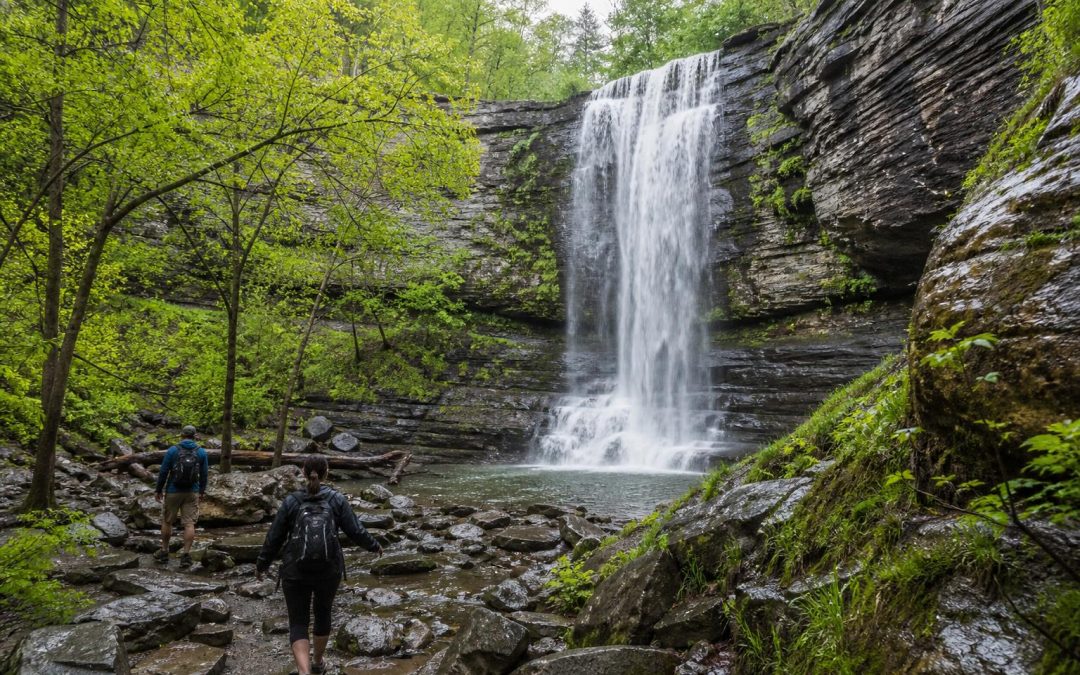
Here is the first thing to understand about Arkansas waterfalls: the weather is part of the waterfall.
A cascade that shakes the ground after several days of rain may shrink to a quiet trickle a few weeks later. That does not make Arkansas waterfall hunting unreliable. It makes it interesting. You are learning to read the state itself, from the wet sandstone of the Ozarks to the steep hollows of the Boston Mountains.
The tallest waterfall is not always the best day, either. Sometimes the trail, the creek crossings, the bluff shelters, and the little spring flowers along the way are what you remember most.
The Secret to Seeing Arkansas Waterfalls at Their Best
If friends ask when to look for waterfalls, I usually tell them late winter through spring, especially a day or two after steady rain. The trees are still open enough to reveal the shape of the hills, creeks are moving, and waterfalls that disappear in summer are wide awake.
Autumn can be beautiful, but colorful leaves do not guarantee flowing water. Summer is even less predictable. After a dry spell, some famous falls may be little more than damp rock.
Good to Know: Heavy rain brings its own problems. Creeks rise quickly, rocks become slick, and low water crossings can turn dangerous. Check state park or national forest notices before leaving, and never drive through moving water.
Arkansas waterfalls also explain our landscape. Much of the Ozarks is built in layers. Hard sandstone forms ledges while softer rock underneath wears away. Water reaches the edge, drops into a hollow, and slowly creates the overhangs and bluff shelters that make these trails so much fun to explore.
Once you notice those layers, you start seeing possible waterfalls everywhere.
Favorite Waterfall Hikes, From Easy Walks to Ozark Adventures
Cedar Falls at Petit Jean State Park
If you only hike to one Arkansas waterfall, Cedar Falls is my pick. The roughly two mile round trip begins near Mather Lodge and descends into Cedar Creek Canyon before reaching a 95 foot waterfall surrounded by rock walls.
The climb back out is the part people underestimate. Save some energy and take your time. This is not an easy stroll, but it is manageable for many regular hikers.
Do not rush straight to the falls. Look at the canyon walls, house sized boulders, and the way Cedar Creek has cut through Petit Jean Mountain. The waterfall is the big finish, but the canyon tells the better story.
Swimming is not allowed at Cedar Falls. Enjoy the cool spray, then give the trail back uphill the respect it deserves.
Eden Falls on the Lost Valley Trail
Lost Valley near the Buffalo National River is one of the best introductions to Arkansas hiking. The trail follows Clark Creek past mossy rocks, a natural bridge, bluff shelters, and Eden Falls. When water is running well, the whole valley feels alive.
The main trail is approachable for families, though it becomes rougher and steeper near the upper falls and Cobb Cave. The full outing is a little over two miles round trip.
For Families: You do not have to reach the final cave opening to have a good day. The creek, natural bridge, and lower valley provide plenty to discover. Turn around when younger hikers have had enough and everybody still leaves happy.
Lost Valley is popular for a reason. Go early, especially on a pleasant spring weekend.
Glory Hole Falls in the Ozark National Forest
This is the waterfall that makes people ask, “How did the water get there?”
Instead of pouring over a bluff edge, Dismal Creek drops through a round opening in the rock ceiling. You approach from above, then descend into the hollow and look back toward a waterfall falling through solid stone.
The trail is roughly two miles round trip and feels steeper on the return. Glory Hole needs recent rain, so timing matters. When it is flowing, though, it is one of the strangest and most memorable waterfalls in Arkansas.
Worth Noticing: The hole was formed by water working downward through cracks in the sandstone. What looks like a geological magic trick is really the result of patience, gravity, and an Arkansas creek refusing to take the obvious route.
Hemmed In Hollow
Hemmed In Hollow Falls is often called the tallest waterfall between the Rockies and the Appalachians, with a drop of about 209 feet. The name is famous. The hike should be famous too, because it is tough.
From the Compton trailhead, the route is about five miles round trip with a major elevation change. Going down feels easy. Coming back is a long Ozark climb.
I recommend this one for prepared hikers who want the journey as much as the photograph. Start early, carry plenty of water, and avoid treating it like a quick roadside attraction. After good rain, the thin stream spills from an enormous bluff and seems to drift in the air before reaching the bottom.
The hollow also shows why Buffalo River country feels so wild. Water, limestone, and steep terrain have folded the landscape into places that roads simply cannot reach.
Kings Bluff Falls at Pedestal Rocks
Kings Bluff Falls is seasonal, but the trail remains worthwhile even when the flow is light. The Kings Bluff loop in the Ozark National Forest leads to broad views, unusual rock formations, and a waterfall that drops from a high bluff.
This is a good choice when you want more than one payoff. Pair it with the nearby Pedestal Rocks loop and look for the narrow stone columns left behind as softer rock eroded around them.
Be extremely careful near bluff edges. There are sheer drops without protective railings, and wet rock can be slick.
Falls Branch at Lake Catherine State Park
For a waterfall hike close to Hot Springs, take the Falls Branch Trail at Lake Catherine State Park. The wooded loop is around two miles and reaches a pretty seasonal cascade tucked into the Ouachita Mountains.
This waterfall is smaller than Cedar Falls or Hemmed In Hollow, but that is part of its charm. It feels close and personal, surrounded by trees and layered rock rather than a huge open canyon.
I especially like this choice for visitors who want a real Arkansas trail without committing to an all day Ozark expedition.
Do Not Miss the Trail While Chasing the Falls
Waterfall hikers have a bad habit of staring at the destination and missing everything that explains it.
- Watch the rock layers. A waterfall often appears where a resistant ledge sits above softer stone.
- Look for bluff shelters. These shallow overhangs are not caves. They formed as weather and water removed softer rock beneath a harder cap.
- Listen before looking. In a deep hollow, you may hear falling water long before it comes into view.
- Notice the plants. Ferns, moss, pawpaw, spicebush, and spring wildflowers reveal the cooler, wetter conditions near a creek.
- Look downstream too. The waterfall gets the photograph, but plunge pools, boulders, and twisted channels show where the water goes next.
Build a Better Arkansas Waterfall Day
Choose one major hike and leave room for an extra stop. After Cedar Falls, explore the overlooks and Rock House Cave at Petit Jean. After Lost Valley, spend time along the Buffalo River near Ponca. If you hike Glory Hole, enjoy the drive through Newton County instead of racing back to the highway.
Travel Tip: Download directions before entering the national forest. Cell service can disappear exactly when you need it, and some trailheads are reached by rough gravel roads. Tell someone where you are going and carry a paper map as backup.
Wear shoes with real traction. Bring more water than you expect to need. Stay off the top of wet falls, keep children close near bluffs, and leave rocks, plants, and old objects where you find them.
Most of all, do not judge the day only by how much water is falling. An Arkansas waterfall hike teaches you how our mountains hold rain, how creeks carve hollows, and why a quiet patch of woods may hide something wonderful just beyond the next bend.
That is the real pleasure of waterfall hunting here. The waterfall is not separate from Arkansas. It is Arkansas, moving downhill one drop at a time.