
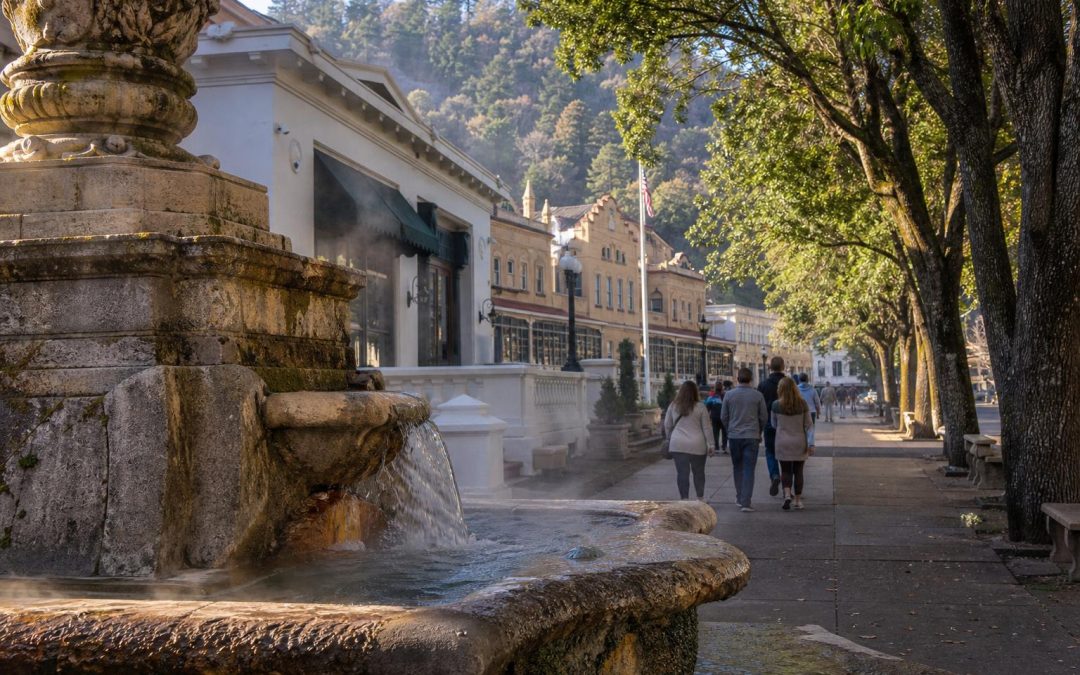
Stand beside an Arkansas spring for a few minutes and watch what happens.
Someone leans over to look into the water. A child searches for fish. A couple sits on a nearby bench. Somebody fills a bottle where collecting water is allowed. Even today, springs have a way of pulling people toward them.
That is not new. Long before a town had a courthouse square, a railroad depot, or a stoplight, it needed water. A dependable spring could give travelers a reason to stop, settlers a reason to stay, and entrepreneurs a reason to start building.
Here is the part most people miss: many Arkansas springs were the first public gathering places in their communities. The town did not simply happen to have a spring. In many cases, the spring explains why the town is there at all.
Start With the Water
Arkansas is especially good at making springs.
Across the Ozarks, rainwater slips into cracks and openings in limestone and dolomite. It moves underground through a landscape full of caves, channels, and hidden drainage systems before returning to daylight. That is why an ordinary looking hillside can suddenly produce a clear, steady stream.
In the Ouachita Mountains, the famous thermal springs of Hot Springs follow a different path. Rainwater travels deep underground, becomes heated by the earth, and rises through fractures in the rock. The water is hot because of depth and geology, not because a volcano is hiding under Garland County.
For early communities, this water was valuable infrastructure. A spring could provide drinking water, serve livestock, power a mill, support a business, and offer relief during dry weather. Roads and trails often bent toward dependable water for the same reason modern highways bend toward towns with fuel and food.
Once you understand that, Arkansas place names begin to feel like clues. Hot Springs, Eureka Springs, Siloam Springs, Mammoth Spring, Cave Springs, and Ravenden Springs are not decorative names. They are little maps of what mattered when those places began.
From Drinking Water to Resort Towns
Practical water was only the beginning.
During the nineteenth and early twentieth centuries, Americans placed enormous faith in mineral water. Springs were promoted as treatments for all kinds of ailments. Some claims were hopeful. Others were wonderfully exaggerated. But the belief created hotels, bathhouses, bottling businesses, railroad stops, and entire resort towns.
Hot Springs became the grandest Arkansas example. People had gathered around its thermal water long before modern development, including Native peoples who knew the springs well. The federal government protected the springs in 1832, decades before the National Park Service existed.
That early protection tells you how important the water had become. Bathhouse Row was not built beside a pretty natural feature. It was built around a resource that people believed could improve their lives.
Eureka Springs followed a different pattern. Its cold springs tumble from the steep Ozark landscape rather than rising hot from deep underground. Health claims helped launch the town, and crowds arrived quickly. Hotels, homes, stairways, and streets were fitted onto hills surrounding the springs.
This is why Eureka Springs can feel delightfully scrambled. The town was shaped by hills, hollows, and water before anyone worried about making a neat street grid.
Where to Experience the Story Today
Hot Springs National Park
If you visit only one place to understand how spring water shaped Arkansas, make it Hot Springs.
Start at the Fordyce Bathhouse, then walk Bathhouse Row and the Grand Promenade. The Fordyce helps explain the elaborate bathing culture, but do not spend the whole visit indoors. Look for the Hot Water Cascade near Arlington Lawn, where steaming water runs over the hillside.
Worth Noticing: Much of the thermal water is protected beneath the surface. The visible cascade gives you a rare chance to see and feel the heat that put this city on the map.
You may also notice people filling jugs at designated fountains. That everyday ritual connects modern Hot Springs with generations of people who came specifically for the water.
Eureka Springs
Eureka Springs is my pick when you want to see how springs shaped the personality of an entire town.
Begin at Basin Spring Park in the middle of downtown. Then walk instead of immediately getting back in the car. Streets climb, stairs appear where you do not expect them, and small spring structures are tucked into stone walls and shaded corners.
Many visitors admire the buildings without realizing that the scattered springs helped determine where early activity gathered. Find Basin Spring, Harding Spring, or Sweet Spring, and the town begins to make more sense.
Travel Tip: Do not assume spring water is safe to drink. Use only an approved public source where drinking or filling containers is clearly permitted.
Mammoth Spring State Park
Mammoth Spring is where the scale of Arkansas groundwater becomes impossible to ignore.
The spring produces roughly nine million gallons of water an hour and forms the beginning of the Spring River. Stand near the outlet and watch that huge volume of clear water appear. It feels less like a trickle from the ground and more like a river arriving all at once.
The park also preserves pieces of the community that grew around that power, including an old Frisco railroad depot and the remains of a hydroelectric plant. This is a good place to connect water with industry, transportation, fishing, and everyday town life.
For Families: Mammoth Spring is one of the easiest places to make the story visible. Children can see the spring, lake, dam, river, depot, and old power equipment without needing a long hike.
Siloam Springs
Siloam Springs offers a quieter version of the story.
The community grew around springs once promoted for their health benefits. Today, downtown green spaces and Sager Creek still make water part of the town’s daily life. This is less of a grand resort experience than Hot Springs or Eureka Springs, and that is exactly why it is worth noticing.
Here, the old gathering place still feels like a neighborhood gathering place.
Slow Down and Look Closer
When you visit an Arkansas spring, do not look only at the water. Look at what gathered around it.
- Watch the shape of the land. Ozark springs often appear below bluffs or at the base of hills where underground water meets the surface.
- Look for stonework. Walls, basins, steps, shelters, and old foundations often reveal how people tried to capture, protect, or display the water.
- Notice nearby roads and buildings. A hotel, mill site, depot, park, or downtown may be there because the spring came first.
- Check the water temperature. Cold Ozark spring water and Hot Springs thermal water tell two very different geological stories.
- Listen. The sound of steady water helps explain why these places remain relaxing gathering spots even after their original industries disappeared.
And please resist the urge to toss coins into natural springs. Coins can affect water quality and wildlife, and Arkansas springs do not need help becoming interesting.
The next time you pass through a town with Spring in its name, slow down and ask where the water is. You may find a park, a stone basin, a hidden branch, or an entire downtown that suddenly makes sense.
That is one of my favorite things about exploring Arkansas. Sometimes the biggest story in a community begins with something as simple as water coming out of the ground.